Playground

Things I build for fun.

Games are where I test systems design, AI and interface ideas without a client’s constraints. Each one taught me something I now use in product work.

All three run in your browser. No install, no sign-up.

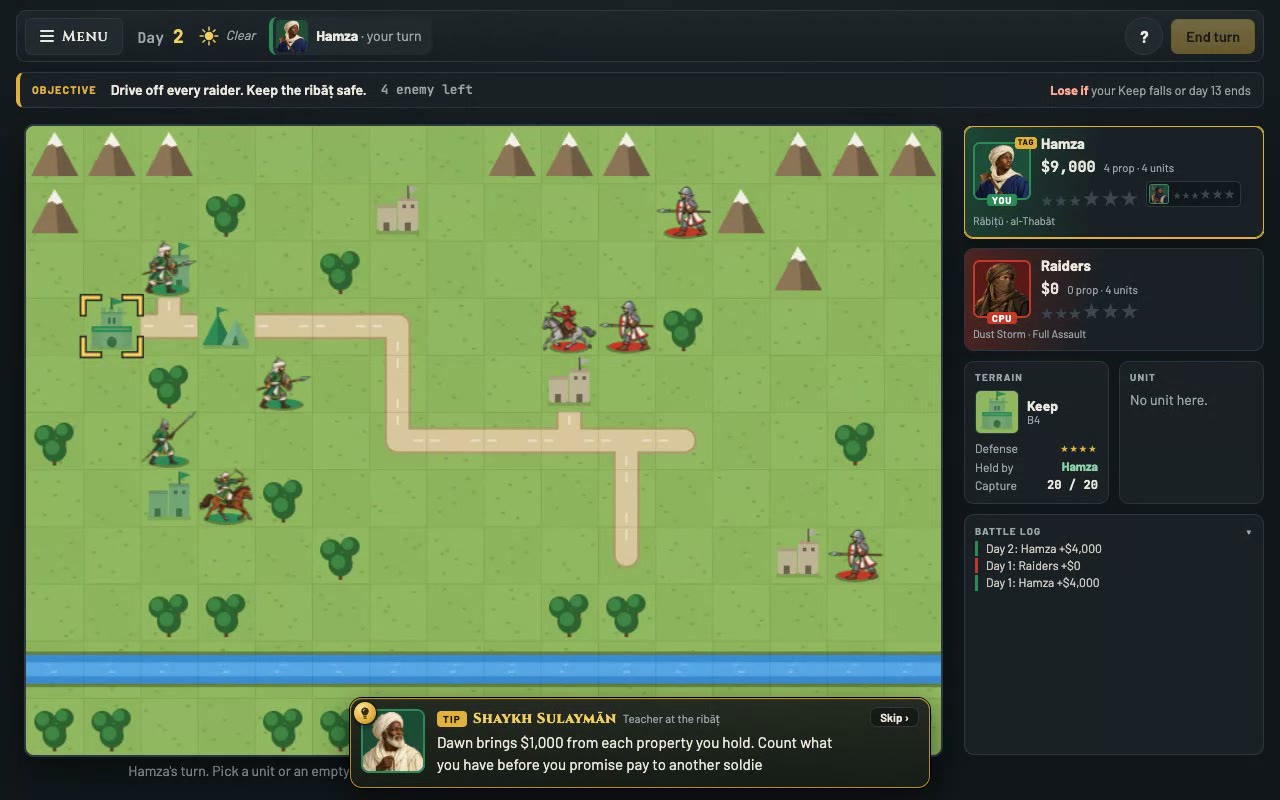
Ribāṭ Tactics: a tile map with spearmen, archers and cavalry around a mud-brick ribāṭ, with the raiders' turn under way Play the demo

What it taught meA clear contract between modules is what lets several builders, human or AI, work in parallel without breaking each other.

  • Canvas
  • Game AI
  • Simulation
  • Async multiplayer
  • Web Audio

This demo has the first story mission and skirmish. The free itch.io release has all ten missions of Act I.

01PlayableStrategy · 28-mission campaign

Ribāṭ Tactics

Turn-based strategy on an eleventh-century frontier. A student of the Qur’an holds a river fort, and later his descendants carry the story across nine centuries.

  • Engine and enemy AI from scratch. Plain JavaScript and canvas, no game framework: rules, pathfinding, fog of war, weather and a computer opponent that plans only with what its own units can see.
  • Tuned by simulation, not guesswork. A headless simulator plays every mission with careful, average and reckless bots, and all 28 missions sit inside a target difficulty band.
  • Built like a team. A written contract between modules let several coding agents own separate files at once, and checkers validate every map and mission before a build.
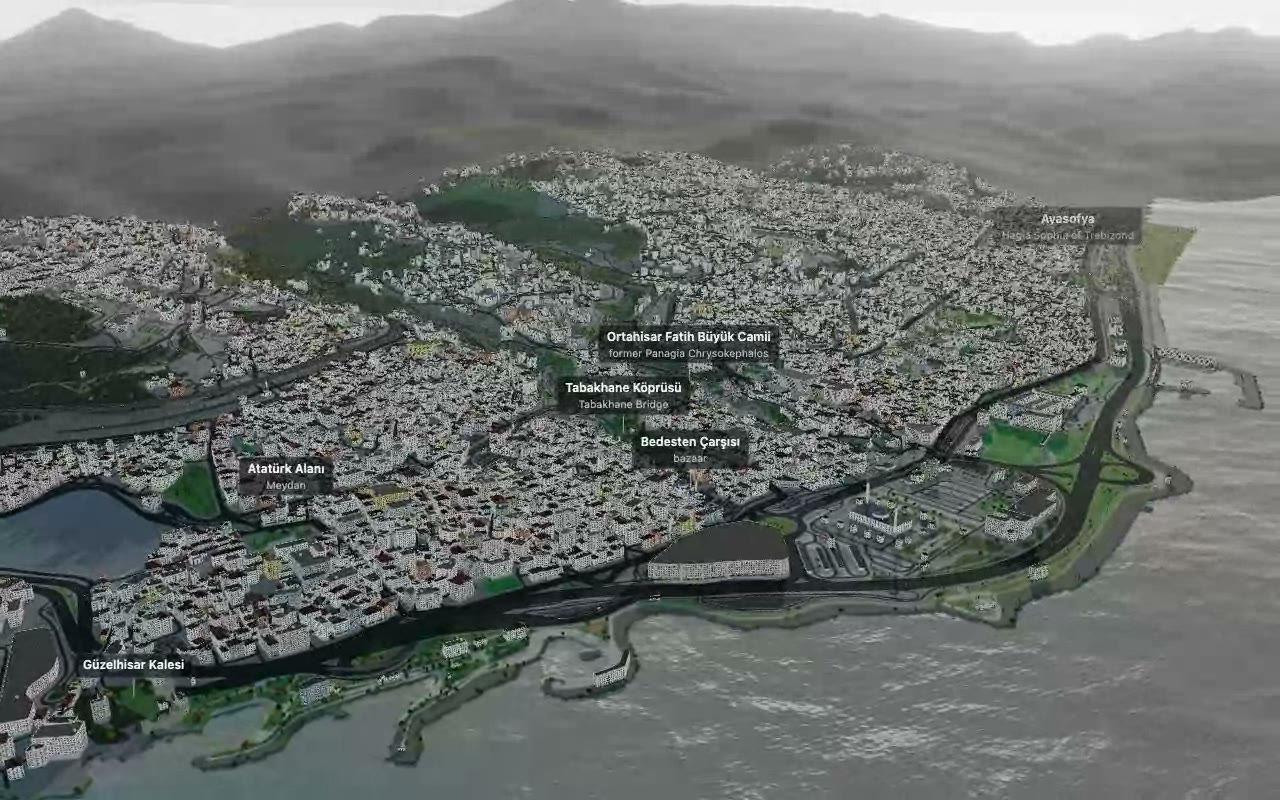
Aerial 3D view of Trabzon’s old city: thousands of buildings on hills between two ravines, above the Black Sea Explore in 3D

02Explorable3D · Real data

Ortahisar 3D

Trabzon’s old walled city, rebuilt in the browser from open map and elevation data.

  • 13,766 real buildings. OpenStreetMap footprints, 4,397 streets, the city walls and 75 mosques, placed on the real ground.
  • Terrain at 5-metre resolution. Elevation tiles across the old city, with the two ravines carved along traced centrelines.
  • Lighting that follows the clock. Sun, sky, ambient occlusion and bloom, with quality tiers so it still runs on a phone.

What it taught meWith real data, most of the work is in the cleaning pipeline. The renderer is the easy part.

  • Three.js
  • WebGL
  • GIS
  • Python pipeline

About 10 MB of map data. Best on a laptop; phones get lighter graphics.

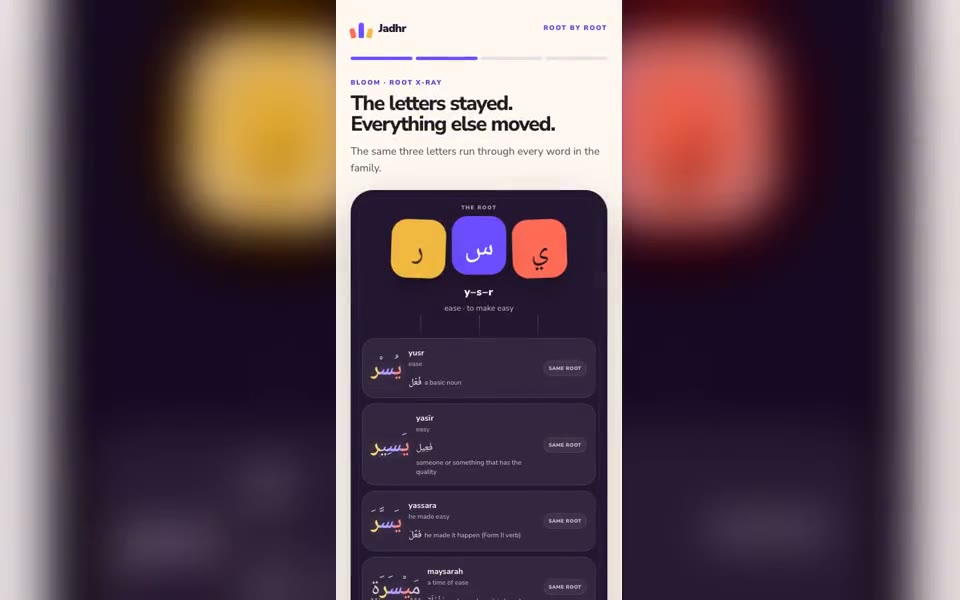
Jadhr: the three letters of the root y-s-r stay coloured while the words built from it change around them Play today’s root

03PlayableDaily puzzle · Arabic

Jadhr جذر

A daily word puzzle. Find the three-letter Arabic root hiding in a family of words, then watch it bloom into the Qur’an.

  • A sourced corpus, not a word list. 165 roots and 595 related words, with every guess checked against 1,609 valid roots. The Qur’anic text comes from Tanzil and the Quranic Arabic Corpus, credited on screen.
  • One visual idea, used everywhere. The three root letters keep their colours as the words around them change, so you can see the pattern instead of being told about it.
  • Tested like a product. 25 test files cover the game engine, the daily schedule, the content and a full playthrough of the corpus.

What it taught meA daily puzzle lives or dies on its content pipeline. The game screen is the small part; checking every word and āyah is most of the work.

  • Vanilla JS
  • Arabic typography
  • Content pipeline
  • Testing

Made for phones. A new root every day, plus a 30-day Ramadan series.

How these were made

Built with AI, reviewed by me

I build with coding agents (Claude Code and Codex) and read what they write before it ships, as I do in client work. The character art in Ribāṭ Tactics is AI-generated from style guides I wrote.

Let’s build yours.

Open to remote product engineering work. Tell me what you’re building.

hamzaabdultawwaab@gmail.com
© 2026 Hamza Abdul-TawwaabMap data © OpenStreetMap contributors